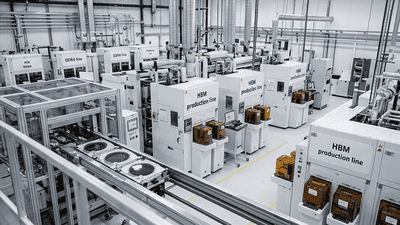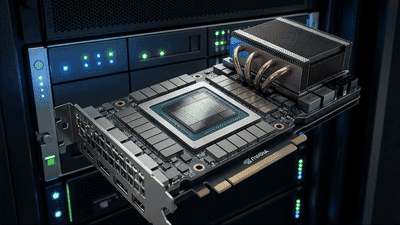
High Bandwidth Memory (HBM) has become central to high-performance computing, AI accelerators, and advanced graphics. Its market is currently dominated by a small number of players with deep expertise in DRAM design, advanced packaging, and system-level integration. This concentration has led many to describe HBM as an oligopoly.

Understanding the current HBM oligopoly
The HBM market today is shaped by a handful of companies that combine DRAM process capabilities with advanced packaging and strong relationships with major system vendors. These firms control key patents, manufacturing capacity for high-density DRAM, and partnerships with foundries and OSATs (outsourced semiconductor assembly and test) that enable 2.5D/3D stacking, through-silicon vias (TSVs), and interposer technologies. Their advantages include:
- Vertical integration of memory design and process technology, enabling optimization for stacked dies.
- Experience with complex assembly flows, testing regimes, and yield improvement for stacked DRAM products.
- Long-term contracts and qualification cycles with hyperscalers, cloud providers, and GPU/accelerator vendors.
- Extensive patent portfolios and cross-licensing agreements that raise legal and technical hurdles for newcomers.
Barriers to entry

Several formidable barriers protect incumbents and complicate entry for newcomers.
- Capital intensity: Building DRAM fabs or securing sufficient capacity at leading-edge nodes requires billions in capital expenditure. Even outsourcing DRAM wafer production to foundries involves high upfront costs for process integration and qualification.
- Advanced packaging expertise: HBM’s value depends on stacking, TSVs, micro-bumps, and often silicon interposers. OSAT partners with this expertise are limited, and establishing the same capabilities takes years and investment.
- Yield and reliability challenges: Achieving acceptable yields in stacked memory—while maintaining thermal and electrical reliability—demands deep process knowledge and iterative engineering, which favors incumbents with production history.
- Intellectual property and standards: Essential patents and proprietary process know-how can block direct copying. Interposer designs, error-correction schemes, and package-level signaling innovations are often protected.
- Customer qualification cycles: System vendors require extensive validation and long-term supply assurances. Winning allocations at scale from hyperscalers or OEMs typically takes multiple qualification cycles, eroding the near-term business case for new entrants.
Potential avenues for challengers
Despite the barriers, several strategic paths could let new entrants gain traction. These aren't mutually exclusive and often combine technical innovation with commercial strategy.
- Focused niche strategy: Entrants can target specialized markets where HBM incumbents have less focus—edge AI devices, specialized FPGAs, or niche industrial applications—where volumes are lower but margins and differentiation needs are higher.
- Partnership and ecosystem plays: Collaborating with foundries, OSATs, and systems companies reduces capital needs and shares risk. Strategic alliances with GPU or AI accelerator firms could secure initial design wins and co-investment in packaging solutions.
- Technological differentiation: Developing alternative high-bandwidth approaches (chiplet-based wide IO, novel 2.5D interposer-less stacks, or hybrid memory cubes using different materials) could sidestep incumbent IP while offering comparable performance.
- Licensing and fabless models: A fabless company that licenses IP and partners with commodity DRAM fabs and advanced OSATs might lower barriers. Success requires exceptionally strong design and systems-integration skills to compensate for lack of manufacturing control.
- Geopolitical and policy support: Government-backed programs, incentives, and local content requirements can help new entrants in regions seeking semiconductor self-sufficiency. Subsidies for advanced packaging fabs or public-private partnerships can accelerate capability building.
Technical alternatives that could disrupt HBM incumbency

New entrants may not need to match current HBM implementations exactly. Several alternative technologies or architectural approaches could provide enough value to compete:
- Wide I/O and stacked LPDDR variants: Wider parallel interfaces with stacked LPDDR can approach HBM bandwidth for certain workloads while using more mature packaging flows.
- Chiplet ecosystems: Standardized chiplet interconnects (like advanced CXL or proprietary high-speed fabrics) enable closer integration of memory dielets without full HBM-style TSV stacks. This reduces reliance on specialized TSV foundry flows.
- Packed die interposers and hybrid bonding: New bonding techniques can simplify assembly and improve interconnect density without traditional TSV processes, potentially lowering cost and improving yield.
- Emerging non-volatile memories: Technologies such as MRAM, ReRAM, or advanced 3D NAND hybrids can, in specific use cases, replace DRAM tiers and offer unique form factors for high-bandwidth accesses when combined with smart controllers.
- On-package HBM alternatives: Solutions that place conventional DDR dies closer to compute or use short-reach interposers can gain performance benefits at lower cost and with fewer IP encumbrances.
Market and commercial levers
Beyond technology, challengers can use commercial approaches to chip away at incumbents’ dominance.
- Price-led entry: New entrants might accept lower margins to win design-ins, trading short-term profitability for long-term share. This is risky given capital intensity, but targeted adoption in high-volume segments could work.
- Customer co-design: Embedding with one or two large customers through co-design agreements and joint investments can secure early volumes and create reference designs that accelerate broader adoption.
- Service and differentiation: Offering stronger warranty terms, flexible supply agreements, or performance guarantees could sway risk-averse buyers to trial a new supplier.
- Open standards advocacy: Pushing for interoperable memory-module standards or chiplet interfaces reduces switching friction and creates opportunities for multi-vendor ecosystems.
Case studies: where challengers have made inroads

Examining analogous markets highlights realistic paths. Two examples are instructive:
- Flash memory: Initially dominated by a few integrated suppliers, flash saw fabless players and foundry collaborations emerge. Innovation around controllers and packaging, along with rising demand, allowed new business models to thrive. Success required strong IP in controllers and supply partnerships.
- GPU accelerators: Niche accelerator vendors gained traction by targeting specific workloads (e.g., crypto-mining, inference appliances). Over time, several were acquired or scaled through partnerships, showing that focused markets and tight customer alignment can overcome incumbency.
Risks for potential entrants
Even with paths to entry, challengers face significant risks that can derail efforts.
- Underestimating integration complexity: Packaging, thermal management, and system tuning often dominate time-to-market and cost; lacking these competencies is fatal.
- Supply chain fragility: Reliance on a small set of OSATs or foundries creates vulnerability to capacity constraints and geopolitical shifts.
- Legal exposure: Entering a space with extensive patents can trigger costly litigation or require expensive licensing agreements.
- Customer trust and qualification: Winning initial design-ins is one thing; scaling to millions of units requires long-term trust, consistent yields, and proven reliability in the field.
Scenarios for disruption
Below are plausible scenarios, ranked from most to least likely, that could enable new challengers to meaningfully erode the HBM oligopoly.
- Geopolitical reshaping: National semiconductor initiatives and export controls create incentives and funding for local HBM-capable supply chains. With sustained investment, regional champions could emerge within 5–8 years.
- Package-level innovation: A breakthrough in bonding or interconnect that lowers cost and simplifies assembly (for example, hybrid bonding at scale without TSVs) makes HBM-like performance accessible to more suppliers.
- Chiplet standardization: Widely adopted, low-latency chiplet fabrics reduce dependence on monolithic stacking, enabling multiple memory vendors to serve the same market through standardized interfaces.
- Vertical integration by big cloud players: Hyperscalers invest directly in memory packaging capabilities or co-invest with partners to secure differentiated memory stacks for their data centers, creating new large-volume customers for challengers.
- Disruptive alternative memories: A new memory technology achieves similar bandwidth and latency characteristics with orders-of-magnitude lower cost or simpler integration—this is the least likely in the near term but would be most disruptive if realized.
Strategic recommendations
For potential entrants:
- Start narrow: Target specific verticals where differentiation matters and volumes are sufficient to justify investment.
- Partner aggressively: Secure alliances across foundries, OSATs, and at least one large system integrator to share risk and accelerate qualification.
- Develop IP in controllers and system integration: Differentiate through software and firmware, which are harder to replicate than raw silicon processes.
- Leverage government programs: Pursue grants, subsidies, and public partnerships to offset capital intensity and protect initial supply commitments.
For incumbents:
- Invest in defensibility: Continue improving yield, reducing costs, and expanding IP around packaging and error mitigation.
- Deepen customer relationships: Offer co-design services, guarantees, and commitments that increase switching costs.
- Monitor alternatives: Keep tabs on chiplet standards, bonding innovations, and emerging memory tech to respond quickly to threats.
- Expand ecosystem: Certify third-party partners and create reference platforms that make it easier for customers to adopt HBM solutions and harder for challengers to replicate the full stack.
Quantitative considerations
Assessing feasibility requires modeling key variables. Potential entrants should build scenarios around:
- Required capital expenditure to reach target capacity and packaging capability.
- Time-to-qualification with major customers and associated burn rate.
- Yield curves and their impact on cost per gigabyte over time.
- Pricing models and how much initial margin compression is acceptable to secure design wins.
- Supply-chain risk contingencies and cost of dual-sourcing critical steps.
Conclusion: challenging but not impossible
The HBM oligopoly rests on high technical and commercial barriers—capital intensity, specialized packaging, yield mastery, IP, and entrenched customer relationships. These factors make direct, broad-spectrum challenges difficult in the short term. However, targeted strategies—focusing on niches, partnering with ecosystem players, exploiting packaging or interconnect innovations, and leveraging policy support—create realistic paths for new entrants.
The most probable routes to disruption are incremental rather than revolutionary: regional players emerging under government support, package-level breakthroughs that lower cost and complexity, and the maturation of chiplet ecosystems that reduce integration lock-in. Entrants that combine focused market selection, strong partnerships, controller/IP differentiation, and pragmatic use of subsidies can build a beachhead. For incumbents, the best defense is continued technical leadership, tighter customer integration, and active participation in shaping standards that favor their strengths.